Kiwi Ears Halcyon Review: A New Driver in Town
Jin Soh
Before diving into the Kiwi Ears Halcyon itself, a little context goes a long way.
For the longest time, dynamic drivers were the only game in town for earphones and in-ear monitors. The familiar setup of a magnet, voice coil and diaphragm has been around for decades, typically delivering a natural, warm sound with punchy bass. Balanced armature drivers then came along, using a tiny armature suspended between two magnets to produce a faster, more detailed sound with a focus on clarity in the mids and highs.
More recently, planar magnetic drivers entered the picture, using a thin film diaphragm with conductive traces suspended between magnets for a more uniform, controlled sound with fast and tight bass. Hybrid designs have attempted to combine these driver types to draw on the strengths of each, though making them sound coherent together is easier said than done. Many manufacturers have instead opted to refine a single driver type rather than chase the complexity of hybrids.

Quietly developing in the background, however, is an entirely different driver technology: MEMS drivers. Unlike conventional drivers that rely on coils and magnets, MEMS drivers use silicon membranes that produce sound via the piezoelectric effect. On paper, this translates to extremely fast transient responses, ideal for high-frequency precision and an open, airy presentation. Being manufactured on wafers like microchips also means exceptional consistency and durability compared to more traditional approaches.
Now after all that, we have someone manufacturing a MEMS hybrid. Enter the Kiwi Ears Halcyon.
What Is It?
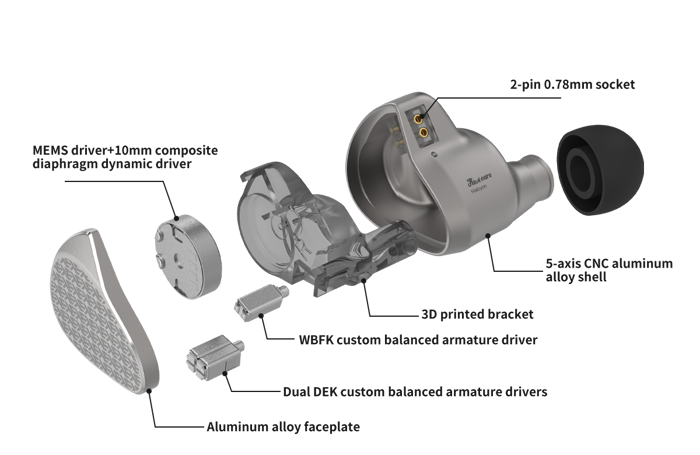
The Kiwi Ears Halcyon is the world’s first IEM to combine a MEMS driver with a single dynamic driver and three balanced armatures in a single shell. The 10mm composite diaphragm dynamic driver handles sub-bass duties, aiming for a subwoofer-like foundation without bleeding into the midrange.
Two DEK-series custom balanced armature drivers cover the midrange, tuned for natural tonal balance across instruments and vocals, while a WBFK-series balanced armature tweeter pairs with the MEMS driver to handle the treble and upper frequencies. Kiwi Ears describes the tuning as studio monitor-leaning neutral with an enhanced sub-bass boost, featuring an 8dB bass shelf that rolls off at 200Hz to keep the midrange clean, with a treble peak at 3kHz for pinna gain compensation.
The Halcyon retails for $259 but is currently crowdfunding on Kickstarter with an early bird price of as low as $199. Once the Super Early Bird tier runs out, the Early Bird tier has the Halcyon at a discounted price of $209, before finally settling on a discounted Kickstarter price of $219.
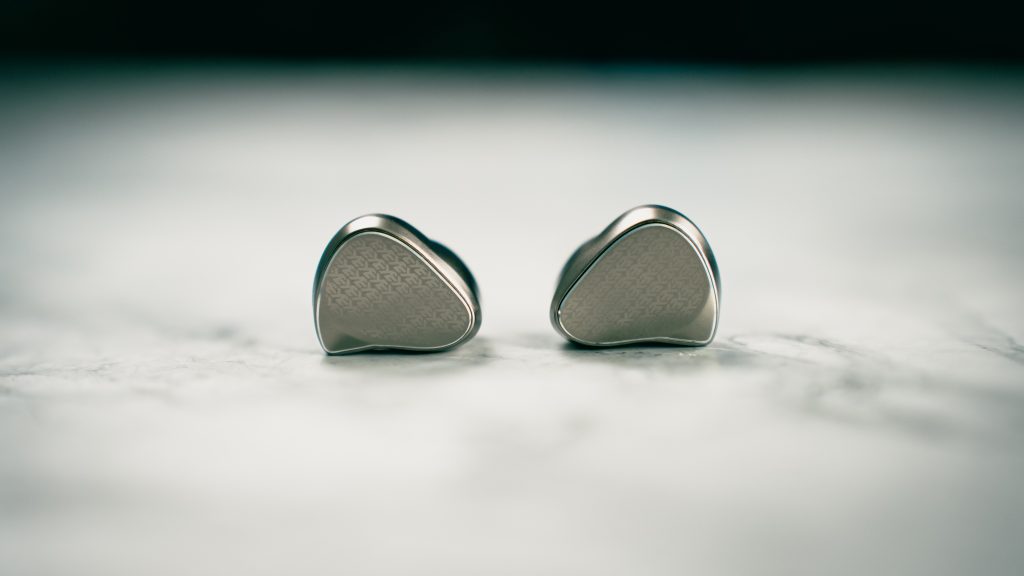

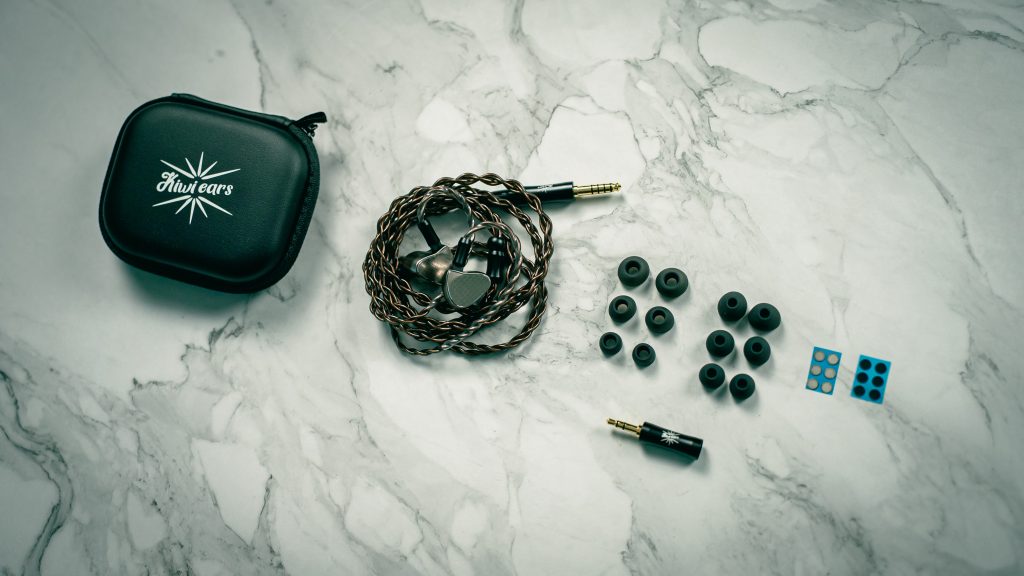
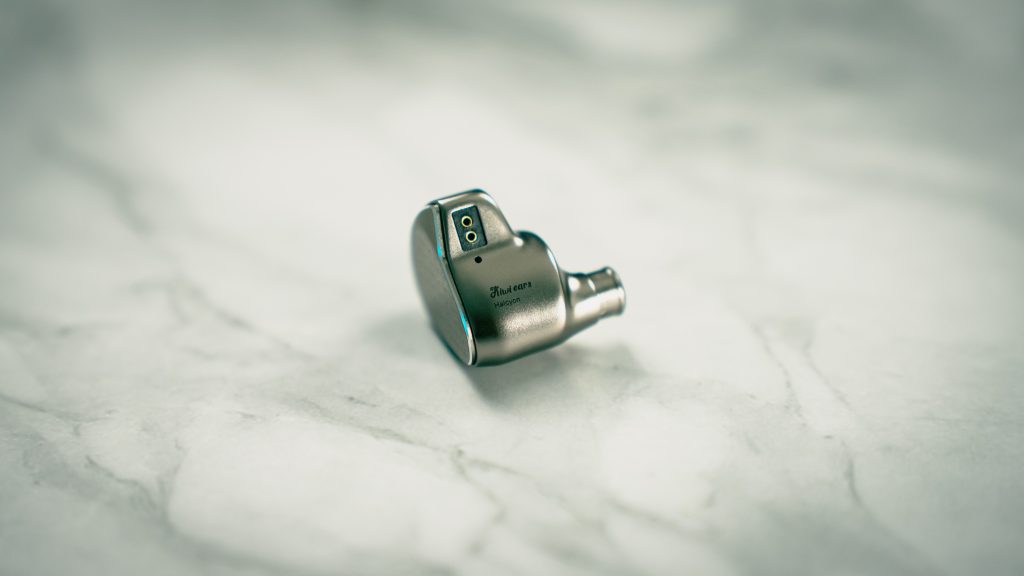
The CNC-machined aluminium housing feels solid and well-constructed, with a precision-engineered acoustic cavity designed to control airflow and minimise standing waves. Accessories in the box include Kiwi Ears’ standard black hard-shell carrying case, a 0.78mm 2-pin detachable OFC cable with a swappable choice of 3.5mm or 4.4mm balanced termination, and three sets of silicone ear tips that share the same material but differ in bore size.
The shell themselves are relatively small and lightweight despite the hybrid driver configuration and should fit snug in most ears without issue. I usually prefer larger-sized ear tips and have no problems with bigger shell designs but the more minute size of the Halcyon fits snug in my ears as well with good isolation.
The cable is noticeably thin and prone to tangling, and the ear tips carry a rather pungent rubber smell straight out of the box, which is not something that typically warrants a mention but stands out enough here to flag. For something billing itself as the world’s first MEMS hybrid IEM and arriving via a Kickstarter campaign, the overall packaging and accessory set feels a touch basic for the occasion, in my opinion.
How Does It Sound?

The Halcyon presents a bright, technically focused listen that leans more toward precision than warmth. Perceived clarity is high, the soundstage is relatively wide with instruments well separated and easy enough to pinpoint within the image. Depth is more intimate than expansive, keeping the presentation upfront rather than truly spacious. It is a noticeably different character from a typical balanced armature set, where things tend to be smoother through the treble. The MEMS influence brings a bit more heat up top, though it stops short of being genuinely harsh.
Starting with the bass, the Halcyon is more sub-bass than mid-bass focused. With the stock tips, sub-bass is punchy but lacks extension and definition. Swapping to tips that emphasise low-end response transforms this immediately, with sub-bass becoming genuinely rumbly and impactful. This has me wishing for better tips or at least more tip types being included in the box. Mid-bass is light throughout, though at least what’s available is tight and well-controlled rather than loose or slow.

The midrange is vocal-forward with a brighter tilt than fully natural. Note weight leans a little thin, which gives the presentation a clean but slightly lean quality. Female vocals in particular come through with crystal clarity and plenty of sparkle, though they stop short of being truly airy, sitting closer to precise and polished than lush or expressive.
Treble is where the MEMS driver makes itself most felt. It is bright and borderline spicy at times, particularly on high-octane electronic pop with prominent female vocals, though it never quite crosses into sibilance. Surprisingly, extended listening is not as fatiguing as the brightness might suggest.

The Halcyon comes into its own most with electronic and synth-driven music, where the speed and energy of the presentation really work in the favour of the MEMS drivers. One practical note: the Halcyon needs a fair amount of power to perform its best, sitting several notches higher than usual on the volume dial compared to most IEMs.
Is It Worth It?

The Kiwi Ears Halcyon is a genuinely fascinating first step into MEMS hybrid territory, and the technical performance on offer is impressive for what it is. The soundstage, separation and perceived clarity are all presented convincingly. That said, the overall sound character is more technical than organic, and the thin note weight and bright treble tilt mean it will not be for everyone.
Bassheads and fans of V-shaped signatures should look elsewhere, though those with a selection of tips to experiment with may find the low-end shortcomings of the stock tips fairly easy to address.
Also, the accessories and packaging feel a tad underwhelming for something as landmark as the world’s first MEMS hybrid IEM, and the cable in particular deserves an upgrade. But if the technology intrigues you and your music library skews bright and electronic, the Halcyon may be worth backing on Kickstarter.